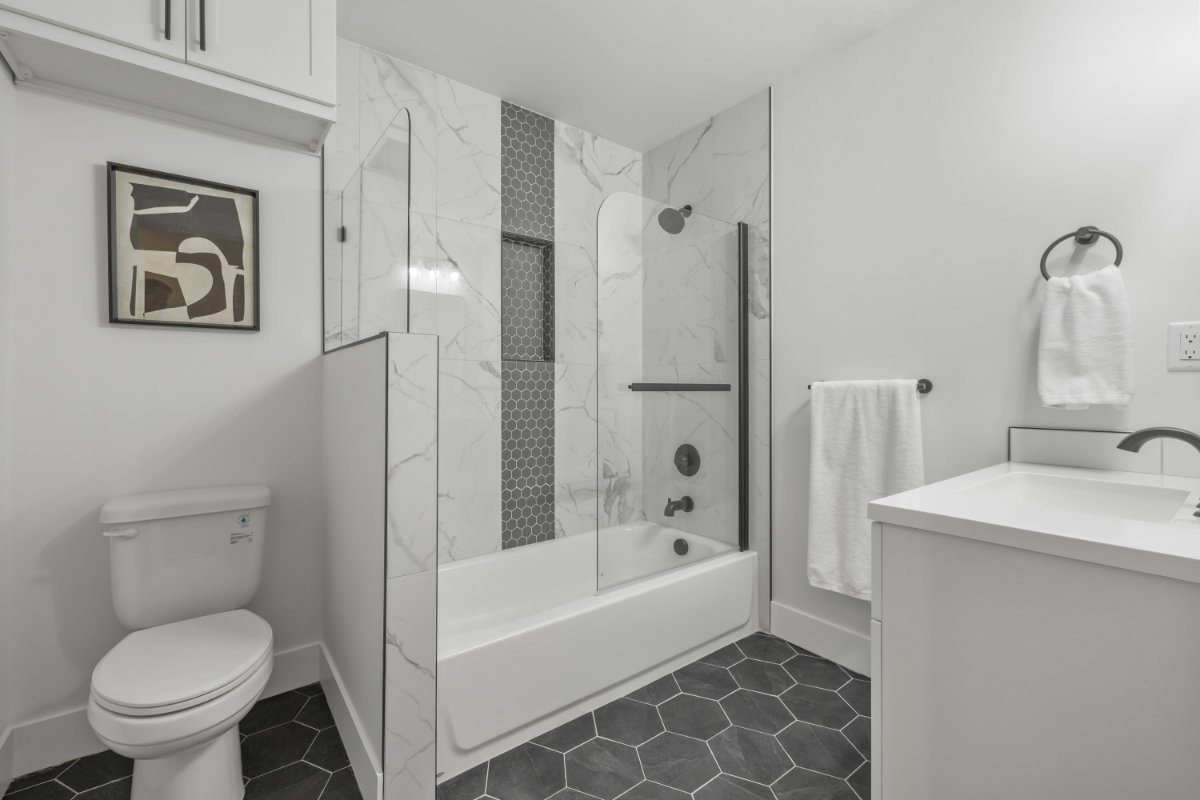
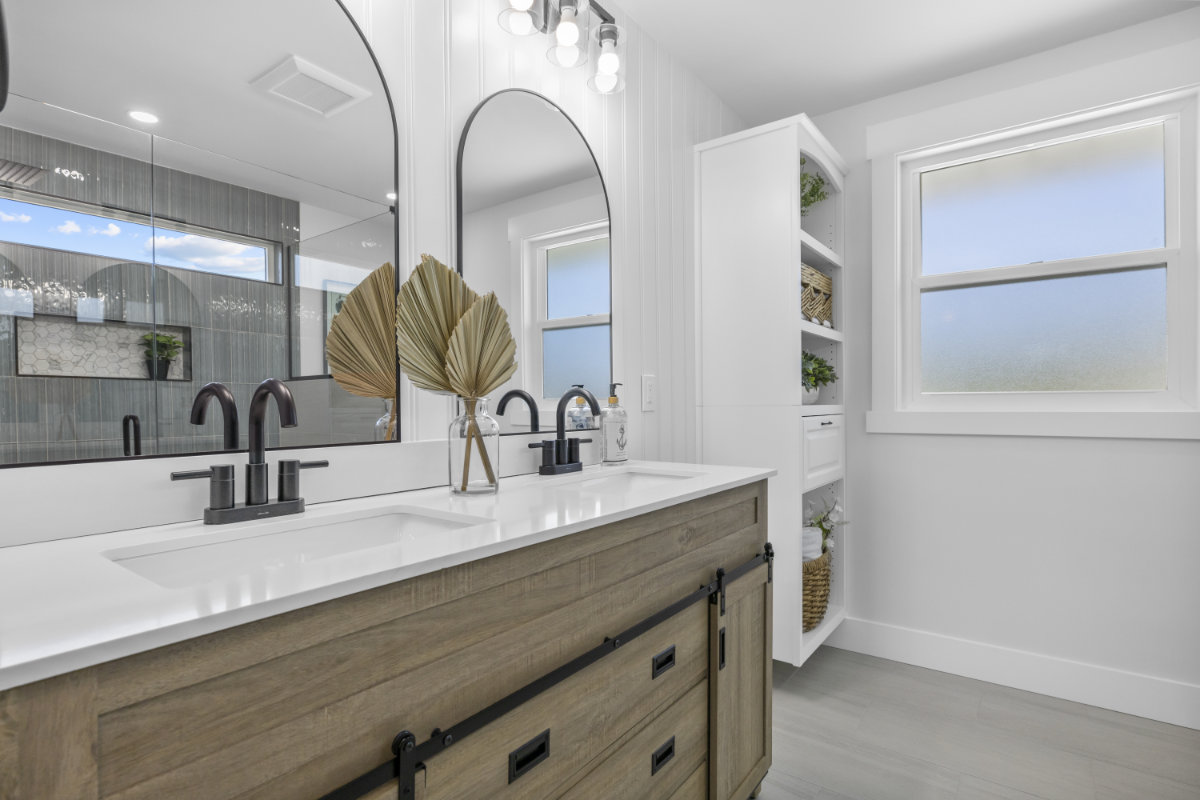
Here in Bellingham and across Western Washington, bathrooms take a beating from October through June. That continuous rain and persistent indoor humidity create the ideal conditions for mold to take hold, especially behind walls and under floors where you can’t see it. Bathroom waterproofing in Pacific Northwest homes means going deeper than surface finishes: layered moisture control, calibrated ventilation, and the right materials from the start.
We’ve seen it happen on job sites across Whatcom County: a remodel that looked solid at handoff starts showing stains, soft spots, and musty odors within a year or two. Atmospheric river events push moisture through every small gap, and once it’s inside a wall cavity, it doesn’t leave on its own. Here’s what it takes to keep bathrooms dry when the rain refuses to quit.
Why Wet Climates Demand a Different Bathroom Build
Our region sees rain from October through June, with only a brief dry stretch in summer. That means high indoor humidity, slow drying, and steady moisture pressure on every surface. A bathroom built for a dry climate won’t hold up here.
The goal is managing water in three ways: keep liquid water out, control water vapor, and move humid air outside quickly. Miss any one of those and moisture finds a path inward. We build assemblies that handle all three together, so bathroom walls stay protected from both splashes and the slow creep of vapor. That layered thinking is what separates a lasting remodel from a short-lived one.
Controlling Vapor Before It Reaches Your Framing
Vapor moves from warm, humid air toward cooler surfaces, and bathrooms produce plenty of it. In our climate, that vapor can pass through drywall and condense inside wall cavities, feeding hidden mold. A proper bathroom vapor barrier wet-climate strategy stops that drift before it starts.
We place vapor control on the warm side of the assembly, then pair it with the right paint and backer board. Not every wall needs the same approach, so we assess placement based on layout, insulation, and airflow. Done correctly, this keeps framing dry year-round. Done wrong, it can trap moisture and make things worse, which is why sequencing and material choice matter so much in bathroom projects like the ones covered on our bathroom remodel page.
Sizing Exhaust for Real Northwest Humidity
Ventilation is your bathroom’s exit door for moisture. Weak or undersized fans leave humid air lingering, and that lingering air is exactly what mold needs. Strong bathroom ventilation in PNW planning removes moisture fast, even during long rainy stretches.
We size fans to the room’s volume, then add capacity for showers and enclosed spaces. Duct runs stay short, sealed, and vented fully outside, never into an attic. A humidity-sensing switch keeps the fan running until the air clears. In damp months, that automatic run time does the quiet work of protecting your finishes. Pairing proper airflow with strong waterproofing systems gives you a bathroom that dries between uses, which is the real key to staying mold-free over time.
Five Practical Steps for a Mold-Resistant Bathroom
These are the core moves we rely on to keep Pacific Northwest bathrooms dry. Each one supports the others, so we treat them as a system, not a checklist.
Build a continuous shower barrier. We install a bonded shower waterproofing membrane across walls and floor before tile. This creates one sealed surface that blocks water from reaching framing behind your finishes.
Choose materials that shrug off moisture. We select mold-resistant bathroom materials like cement backer board and mold-inhibiting paint, so damp air has nothing organic to feed on inside the room.
Pick smart, water-tolerant flooring. In Western Washington bathrooms, vinyl flooring is one of our go-to recommendations. It resists swelling, handles constant dampness, and pairs well with waterproof laminate options for a fully moisture-tolerant floor.
Seal every transition point. Use flashing or sealant at corners, seams, and fixture penetrations. These small gaps cause big failures, so we detail them carefully during installation and again before finishing.
Vent, then verify. After framing and finishes, we confirm airflow, check membrane coverage, and test drainage. This final pass catches issues while they’re still easy and cheap to correct.
Trust Laika Construction With Your Bathroom
At Laika Construction, we treat every bathroom as a moisture system, not just a set of finishes. Our crews understand how our wet climate behaves, and we build assemblies that hold up long after the project wraps. That attention protects your home and your investment.
We work with care, clear communication, and craftsmanship you can count on. Whether you’re updating one bath or planning a full remodel through our remodeling hub, we bring the same standard to every job. Explore our related service and location pages to see how we serve homeowners across the region.
Our long rainy season keeps humidity high and drying slow. Laika Construction builds layered moisture control and strong venting to keep bathrooms dry through those damp months.
Yes. Tile and grout aren’t fully waterproof on their own. Laika Construction installs a bonded membrane so water never reaches the framing behind your walls.
It’s an excellent option. Laika Construction often recommends water-tolerant flooring because it resists swelling and handles the region’s constant moisture without breaking down.